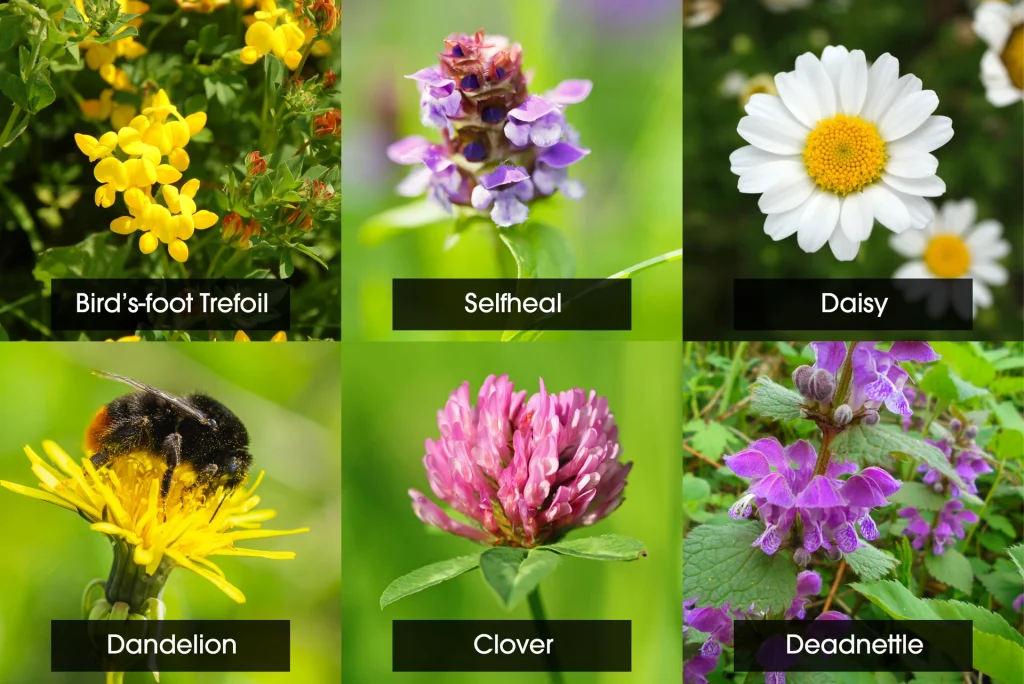
Less Mowing Means More Biodiversity
 The Welsh Government is making the point that putting your grass less often is one of the simplest ways to allow flowers to grow and provide food for pollinators and other wildlife.
It says: “Across public spaces like parks and road verges, you might notice areas being managed differently, with longer grass creating meadow-like or nectar-rich areas. These provide habitats for wildlife. Even if some of these patches are small, they will all add up to a big area. Wildlife will be able to move between habitats as they become connected.
“Local Places for Nature is a Welsh Government initiative to create nature on your doorstep. It provides support and funding to not-for-profit land managers such as local authorities and community and town councils to train staff and buy equipment such as cut-and-collect machines. This is helping public sector organisations to change their mowing practices in a sustainably managed way and expand the areas where they can enhance biodiversity.
“The Welsh Government’s ‘It’s for Them’ Campaign highlights how mowing less and collecting grass cuttings creates habitats for invertebrates, birds, small mammals, amphibians, and reptiles. Schools and youth groups can access educational resources to teach the importance of wildlife-friendly practices.”
It recommends these steps for changing how you mow:
-
Delay mowing until late spring.
-
Create nectar-rich patches by cutting grass in rotation.
-
Transform part of your lawn into a meadow-like haven.
“For details on how you can do this, see the Bee Friendly Planting for Pollinators booklet.
“Every time you mow or strim, it is important to collect and remove grass clippings. This prevents the build-up of dead grass, which can smother delicate plants. Plants need exposed ground for seeds to grow. Collecting the dead grass also reduces soil fertility, which curbs the growth of fast-growing grasses that can choke wildflowers.
“Before strimming or mowing, always check for hiding hedgehogs. When threatened, hedgehogs curl up in a tight ball and do not move away, which makes them vulnerable. If you find a hedgehog, leave it alone and do not cut the area. Hedgehog hospitals and rescue centres receive many hedgehogs with bad injuries from strimmers, which can be fatal.
“As your garden comes to life, spend a few minutes observing pollinators like bees and butterflies visiting your flowers and take part in a FIT Count (Flower-Insect Timed Count). This simple 10-minute survey collects valuable data on the total number of insects visiting target flowers and every count helps us measure trends in pollinator populations. FIT Counts can be done in warm, dry weather from April to September.
“If you don’t have access to your own green space, you could visit your local park or community garden. You can find all the information you need and even an app to participate on the UK Pollinator Monitoring Scheme website.”