Solitary Bees – Lone Rangers of Pollination

umsiedlungen/Pixabay
I have been watching the bees and trying to persuade them that, wherever they are coming from, I do wish they wouldn’t choose my conservatory to die in. This led to my wanting to know more about the variety of expired bodies that need to be rescued daily or which will dry out and shrivel up and, saddest of all, end up in my Hoover bag.
Solitary bees are a fascinating and diverse group of insects, essential to the health of ecosystems and agriculture. Unlike their more familiar cousins, honeybees and bumblebees.
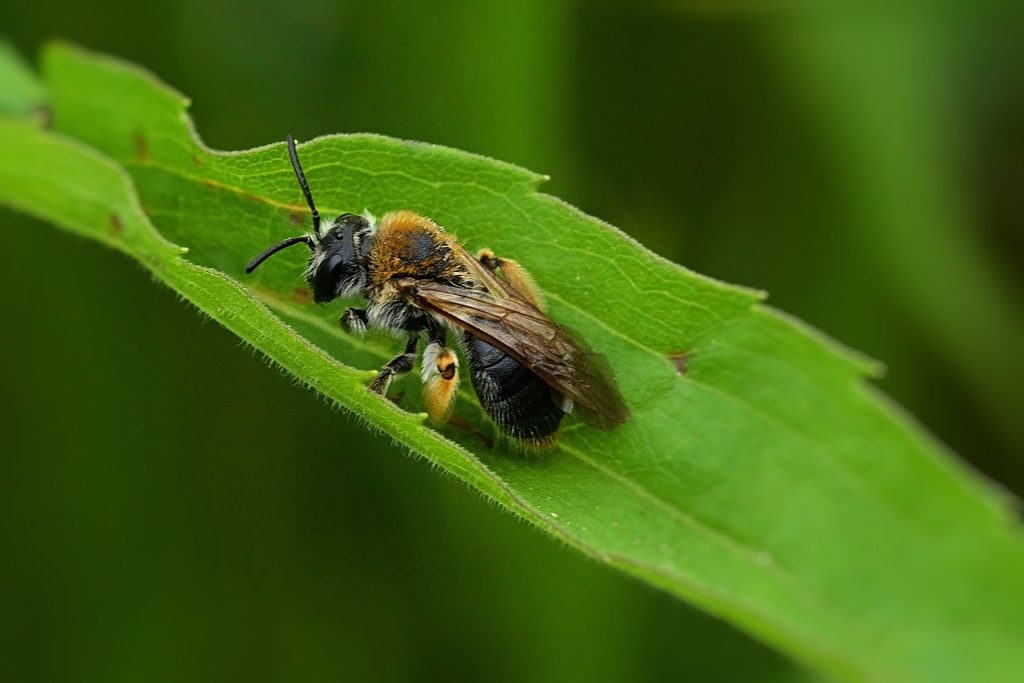
Solitary bees do not live in colonies or produce honey. Instead, each female lives and works alone, building and provisioning her own nest. A massive 20,000 of species of bees live around the world, and around 90 per cent of them are solitary.
Solitary bees emerge in spring or early summer, depending on the species and local climate. Mating occurs shortly after emergence, after which males typically die within a few weeks, and the solitary females, now fertilised, begin creating a nest.
These nests can be found in a variety of places: underground burrows, hollow plant stems, wood crevices or even artificial bee hotels placed by gardeners.
Each female bee selects a suitable site and constructs a series of chambers, each of which will house a single egg.
jggrz/Pixabay
Provisioning these chambers is a demanding process. The female gathers pollen and nectar from flowers, forming a nutrient-rich ball called a “pollen loaf” in each chamber. She then lays an egg on the pollen ball, seals the chamber and begins work on the next one. This cycle repeats until she either runs out of energy or dies, usually within a few weeks. Despite their short lives, solitary bees are incredibly productive. Some species can visit thousands of flowers a day, making them extremely efficient pollinators.
One of the most well-known types of solitary bee is the mason bee, which uses mud to partition nest chambers, often in hollow reeds or cracks in walls. Another common group is the leafcutter bees, which cut neat circles from leaves to line their nests. These bees are gentle and rarely sting, making them welcome in gardens and urban environments.
Solitary bees play a crucial role in pollinating wild plants and crops. Studies have shown that they are often more effective pollinators than honeybees for certain fruits and vegetables, such as apples, cherries and blueberries. Their foraging behaviour – more focused and less distracted than social bees – means that they deposit more pollen per flower visit.
However, solitary bees face many of the same threats as other pollinators. Habitat loss, pesticide use, climate change and disease are all contributing to population declines. Because they do not live in large colonies, they are especially vulnerable to environmental disturbances. Efforts to support solitary bees include planting native flowers, avoiding pesticides, and creating nesting habitats such as bare soil patches or bee hotels.
Solitary bees lead brief but remarkable lives, working tirelessly to pollinate the plants that support our ecosystems and food supply.